
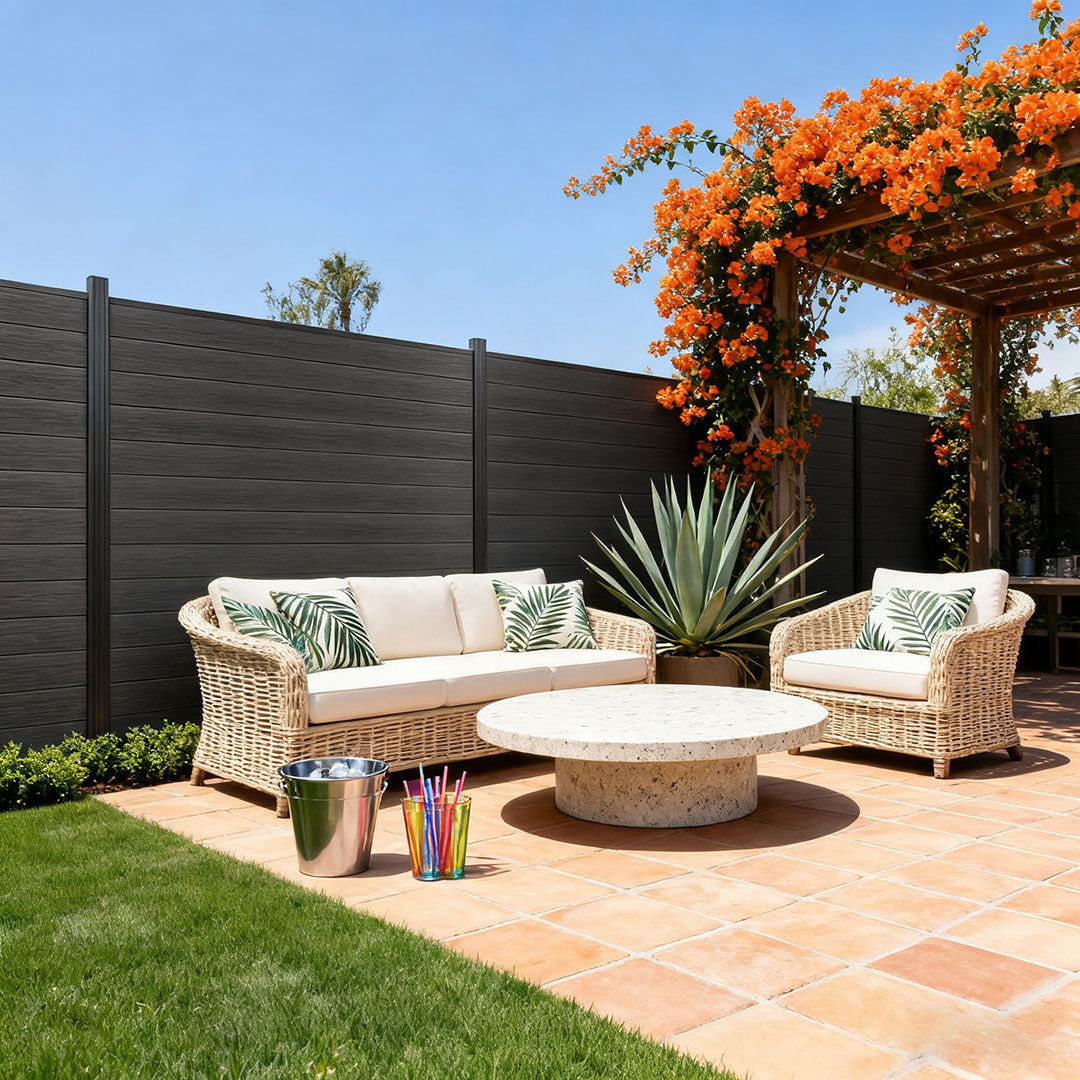
Benefits of Installing a WPC Fence
Tired of spending your summer weekends sanding and staining a worn-out wood fence? There’s a modern alternative that gives you the rich look of wood without the constant work, and it’s called Wood-Plastic Composite. Think of it like the popular composite decking you see on patios, but engineered to create a beautiful and durable property line.
The secret to this material lies in a clever recipe. So, what is composite fencing made of? This wood-plastic composite is created by blending reclaimed wood fibers for that classic aesthetic with durable, recycled plastics for all-weather strength. In practice, this blend results in tough, eco-friendly recycled fence panels that won’t rot or splinter, giving you the best of both worlds.
Reclaim Your Weekends: The Reality of Low-Maintenance Fencing
Perhaps the most appealing benefit of WPC fencing is the time it gives back to you. Unlike wood, which demands yearly attention to prevent decay, a composite fence frees you from the cycle of sanding, sealing, and staining. It’s a genuine wood fence rot repair alternative that lets you enjoy your yard instead of working in it.
Consider the difference in your annual to-do list:
-
Traditional Wood Fence: Sanding, staining or painting, and checking for rotted boards.
-
WPC Fence: An occasional wash with soap and water.
For routine upkeep on your low maintenance garden fencing, a bucket of soapy water and a soft-bristle brush are all you need to wash away dirt and grime. There are no special chemicals or treatments required. This effortless care is possible because the material is engineered to resist the moisture, sun, and pests that constantly attack wood.
How WPC Fences Handle Extreme Weather, Pests, and Time
The real magic of WPC is how the materials work together. The plastic in the blend acts as a permanent shield for the wood fibers, locking out the moisture that causes traditional wood to rot, mold, and swell. This makes it a true wood fence rot repair alternative because the problem is engineered away from the start, rather than being managed with sealants.
Furthermore, pests that feast on wood, like termites and carpenter ants, simply have no interest in a composite fence. Since the wood fibers are thoroughly blended with inedible plastic, insects don’t recognize it as a food source. This built-in immunity makes WPC the best alternative to a wood privacy fence in areas where insect damage is a constant worry.
This same resilience makes for a durable all-weather privacy fence that won't warp or splinter through cycles of rain, snow, and sun. Where a wood fence expands and contracts, leading to instability, a composite fence holds its shape and strength. But how does this advanced durability compare directly to wood and vinyl?
WPC vs. Wood vs. Vinyl: A Head-to-Head Comparison
While both composite and vinyl fences promise low maintenance, their durability can differ significantly. Many standard vinyl panels are hollow, which can leave them vulnerable to cracking from a stray soccer ball or leaning lawnmower. In the composite vs vinyl fencing pros and cons discussion, WPC’s solid, dense construction gives it superior impact resistance, feeling more substantial and wood-like to the touch. It’s built to handle the realities of an active backyard.
Against wood, the tradeoff becomes even clearer. WPC delivers the satisfying weight and premium look of a traditional wood fence without the constant threat of rot, warping, or insect damage. You get the timeless aesthetic you want, but you trade the yearly cycle of sanding and staining for a simple, occasional cleaning with soap and water.
To take durability a step further, many modern WPC products feature a protective outer layer. Think of this "cap" as a high-performance shell that shields the board from stains and fading. Understanding the difference between capped versus uncapped composite boards is key; this added layer ensures the fence’s color stays rich and vibrant for years, giving you ultimate peace of mind.

Is Composite Fencing Worth the Investment? A Look at the True Cost
When wondering is composite fencing worth the investment, the initial price tag can give you pause. The composite wood fencing cost per foot is often higher than that of a basic wood fence, but that number doesn’t tell the whole story. The true financial picture only emerges when you look beyond day one and consider the total cost over the fence's entire lifespan.
With a traditional wood fence, the purchase price is just the beginning. You’ll repeatedly spend money and time on stain, sealant, and replacing rotted or warped boards. These ongoing expenses add up significantly over the years. A WPC fence, however, eliminates these recurring costs, making it a genuinely low maintenance garden fencing solution that you effectively buy once.
Ultimately, you aren't just paying for fence panels; you're buying back your future weekends. That higher initial investment translates directly into years of reliable performance without the constant worry or expense of upkeep, giving you lasting peace of mind.
Getting the Look You Want: WPC Fence Styles and Colors
A fence isn't just a practical investment; it's a major part of your home's curb appeal. Whether you want the timeless look of a traditional privacy fence or the clean lines of modern composite privacy screens, there’s a WPC style to match your vision. This versatility ensures you don’t have to sacrifice aesthetics for durability.
What truly sets it apart, however, is how the color lasts. Instead of a surface stain that the sun quickly bleaches, these fade resistant fence panel colors are mixed directly into the composite material. This means your fence will hold its rich, deep tones for years, making it the best alternative to a wood privacy fence for achieving lasting beauty with minimal effort.

Is a WPC Fence the Right Choice For Your Home?
To decide if a WPC fence is the right long-term investment for your yard, consider if your needs align with the following priorities.
WPC Is a Great Fit If You...
-
Value your free time and hate annual maintenance.
-
Want a fence that will look great for 15+ years.
-
Are willing to invest more upfront to save money long-term.
-
Live in a wet, humid, or pest-heavy region.
Choosing the right fence isn't just about defining a property line; it’s an investment in your peace of mind and, more importantly, in your future free time.


Leave a comment
This site is protected by hCaptcha and the hCaptcha Privacy Policy and Terms of Service apply.