
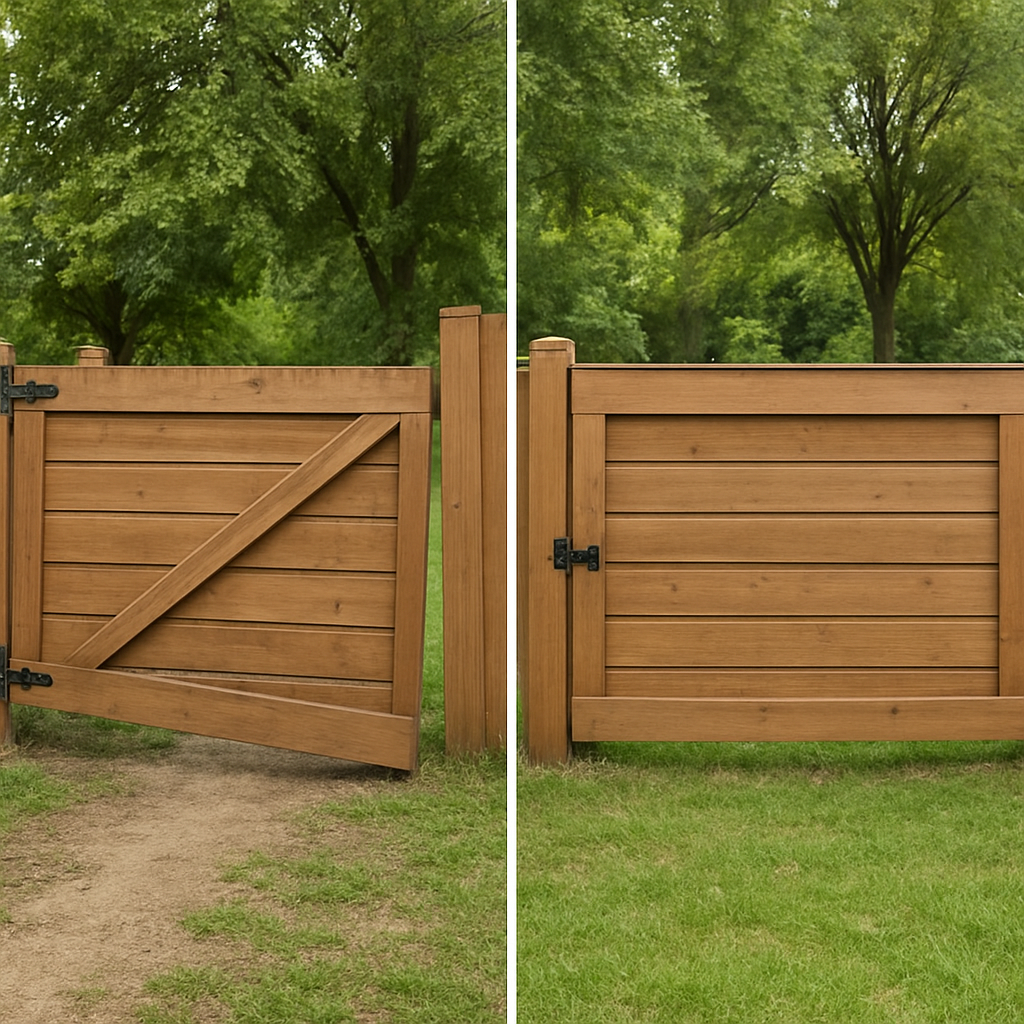
Choosing the Perfect Horizontal Fence Gate
The sleek, clean lines of a horizontal fence gate add a touch of modern style to any yard, but there’s a crucial secret to getting it right that goes beyond the choice of wood or stain. A beautiful contemporary slatted gate involves more than just turning the boards sideways; in practice, a horizontal structure constantly fights a battle against gravity. This downward pull creates a persistent problem known as "gate sag"—the droop that causes a gate to scrape, stick, and eventually fail.
Getting a modern horizontal wood gate that works smoothly for years isn't complicated, though. It simply requires a specific approach focused on strength. The following are the three non-negotiable elements for a strong, long-lasting gate that stays perfectly aligned.

Why Horizontal Gates Droop (And How to Stop It Before It Starts)
Imagine holding a heavy ladder sideways from just one end—it will immediately want to droop toward the ground. A horizontal gate faces this same relentless pull from gravity. Every single board adds weight to the unsupported end of the gate, constantly trying to drag the latch side down. This makes a heavy duty gate frame essential.
Unlike a traditional gate where vertical pickets help transfer weight down to the frame, horizontal boards just stack on top of each other. They offer no structural support to fight the droop; they only contribute to the problem. This inherent design is the main reason people wonder how to stop a wood gate from warping and sagging under its own weight.
At first, the signs are small: a latch that’s slightly misaligned or a gate you have to lift a little to close. Soon, the corner is scraping the pavement. This is a clear signal that the gate is losing its structural battle and needs a horizontal gate sagging fix. Luckily, this problem is entirely preventable with the right internal structure.
The Unseen Skeleton: Why Your Gate Needs a Sturdy Frame
To stop that droop, every horizontal gate needs an unseen skeleton holding it together: a sturdy gate frame. Think of it as a picture frame for your gate’s horizontal boards. This perimeter structure is what actually bears the weight and connects securely to your gate post. When learning how to build a gate for a horizontal fence, starting with a solid frame is the most critical step.
This frame is built from two strong vertical boards on the sides (called stiles) and two horizontal boards at the top and bottom (called rails). Together, these four pieces form a rigid box that contains the heavy infill boards. Whether you opt for a classic wood frame or a durable metal frame wood plank gate, these components are what keep the structure from pulling itself apart.
Even a perfect rectangular frame can be pushed into a diamond shape under stress. For true, long-lasting strength and proper gate post installation, the frame needs one more simple addition to lock in its squareness for good.

How a Simple Diagonal Line Guarantees a Square Gate
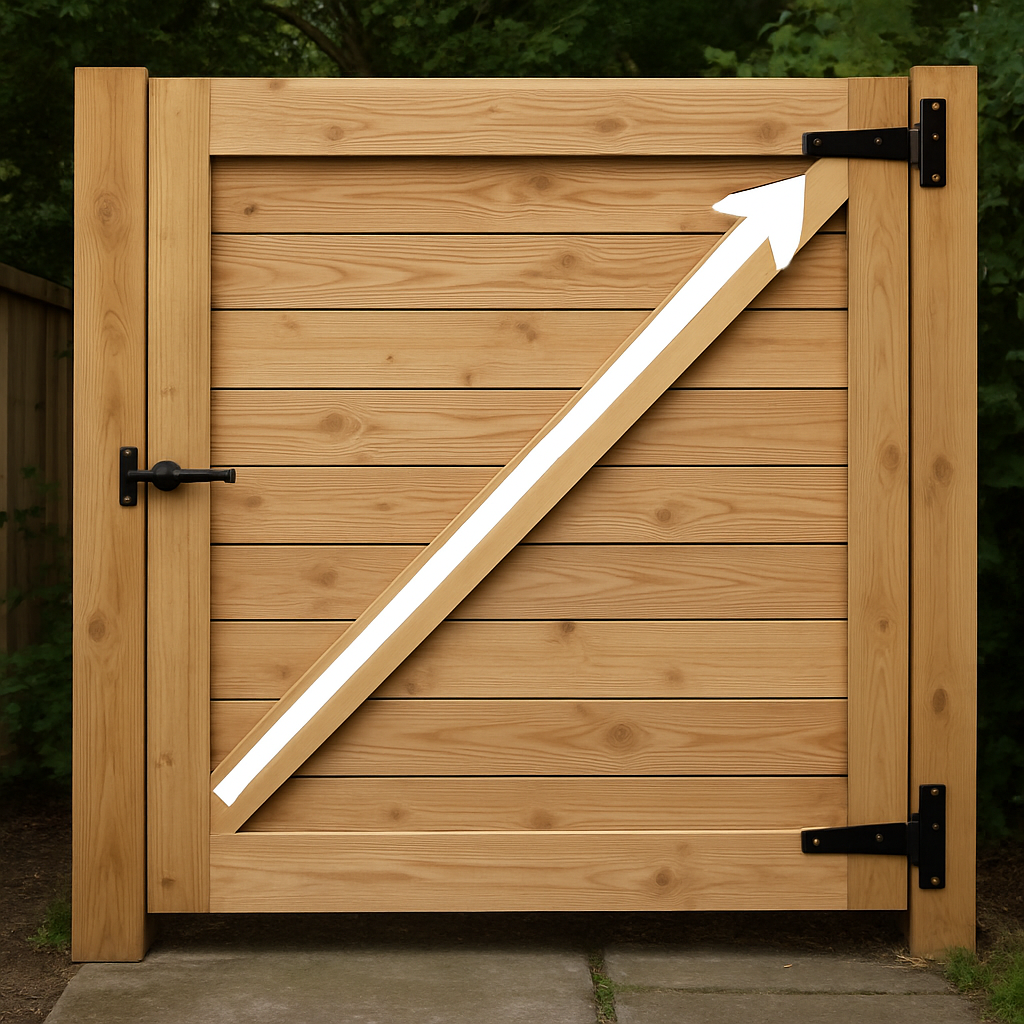
Your gate’s rectangular frame is a great start, but gravity will still try to pull the latch side down, distorting the frame into a sagging diamond shape. This twisting force is often called racking. To prevent this and lock your gate's frame into a perfect square, you need one final piece of support that creates a strong triangle.
The classic solution is a diagonal wooden brace, which creates the popular Z-brace gate look. For it to work correctly, this brace must run from the bottom hinge-side corner up to the top latch-side corner. This specific angle cleverly redirects the gate's weight, channeling the downward pull back toward the sturdy post and its hinges instead of letting the far corner droop.
A popular and easy alternative is an anti-sag kit. This system uses a steel cable and a small metal piece called a turnbuckle to create the same diagonal tension. It's an excellent horizontal gate sagging fix for a DIY horizontal slat fence gate because the turnbuckle allows you to easily tighten the cable over time, keeping your gate perfectly aligned for years to come.
The Heavy Lifters: Choosing Hardware That Won't Fail
Even with perfect bracing, all of your gate’s weight hangs on its hinges. The small, simple hinges you might see on an interior door or a lightweight picket gate just aren't built for this kind of constant, heavy load. Using them on a horizontal gate is a recipe for bent metal, pulled-out screws, and a gate that sags no matter how well it was built.
To handle the stress, you need hardware with a clear Hinge Weight Rating—for most wooden gates, a rating of 100 pounds per pair is a safe minimum. Long Strap Hinges are an especially smart choice. Their extended "strap" distributes the weight of a heavy single swing horizontal privacy gate across a wider area of the gate and post, reducing the strain on any single point.
Finally, don't forget the unsung hero: the Gate Stop. This small but essential piece is installed on the latch-side post to physically block the gate from swinging past its closing point. Without a stop, a gust of wind or an accidental hard push can bend your hinges backward, causing permanent damage. It’s the simplest way to protect your entire investment.

Wood, Metal, or Composite: Choosing the Best Material for Your Gate
The material you choose for your gate boards is a balancing act between style, weight, and long-term maintenance. Each option has a distinct personality and its own set of rules for success.
For a classic, natural look, nothing beats real wood. The best wood for outdoor gates is Cedar or Redwood, as these species are lightweight and naturally resist rot and insects. However, wood's greatest enemy is moisture. The single most important step for preventing warping is to seal every board completely—all four sides and both ends—with a quality outdoor stain before you assemble the gate. This locks moisture out, preventing the twisting and bending that can ruin a gate's alignment.
A popular low-maintenance alternative is composite decking. Because it’s a synthetic material, it won't rot, warp, or need yearly staining. The major trade-off is weight; composite boards are significantly heavier than wood, requiring an even stronger frame and more robust hardware to prevent sag. For a high-end solution, a metal frame wood plank gate combines a rigid steel frame with beautiful wood infill, offering the best of both worlds: superior strength and timeless style.
DIY or Hire a Pro? A 5-Point Checklist to Help You Decide
Deciding whether to build a DIY horizontal slat fence gate or call a pro comes down to scale and skills. For a standard 3-4 foot walkway gate, this is a very achievable project. Your success, however, will hinge on proper gate post installation. Because these gates are so heavy, the posts must be anchored in deep concrete footings to prevent them from leaning over time.
For more complex situations, such as an automatic horizontal driveway gate, professional help is non-negotiable.
Hire a Pro If…
-
Your gate needs to be wider than 5 feet.
-
The plan requires welding for a metal frame.
-
You're not equipped to dig deep post holes and mix concrete.
-
You want an automatic gate opener installed.
-
You don't own a miter saw and power drill for accurate cuts.
Your Strong and Stylish Gate: A Final Checklist
Before you buy or build, remember the three keys to a long-lasting horizontal gate that defies gravity: a strong frame, a diagonal brace, and heavy-duty hardware. Confirming these three elements are in place is the simple secret to a beautiful gate that brings you joy, not frustration, for years to come.


Leave a comment
This site is protected by hCaptcha and the hCaptcha Privacy Policy and Terms of Service apply.