
Stylish Designs for Horizontal Fence Gates
Is there anything more frustrating than a gate that scrapes the ground? That familiar grind and heave is a sure sign of gate sag, and it can make even the most beautiful horizontal gate feel like a failure. While extremely common, this problem is completely preventable once you understand the one simple force working against every gate you build: gravity.
To understand why wood gates sag, imagine holding a heavy bag with your arm straight out. Your shoulder acts as the hinge, and gravity relentlessly pulls the bag—the latch side of the gate—down. In practice, the sleek horizontal boards offer almost zero structural support against this constant downward pull. This is the key reason a wider or heavier gate is far more likely to sag, warp, and fail over time.
The Secret to a Sag-Proof Gate: Why a Simple Diagonal Brace Is Your Hero
At its core, a gate is just a rectangle hanging by its hinges. Left on its own, that rectangle will always want to droop under its own weight, especially with the heavy, solid look of horizontal boards. The secret to preventing this frustrating sag isn't complicated; it's a single, strategically placed board called a diagonal brace. This one component is the difference between a gate that scrapes the ground and one that swings smoothly for years.
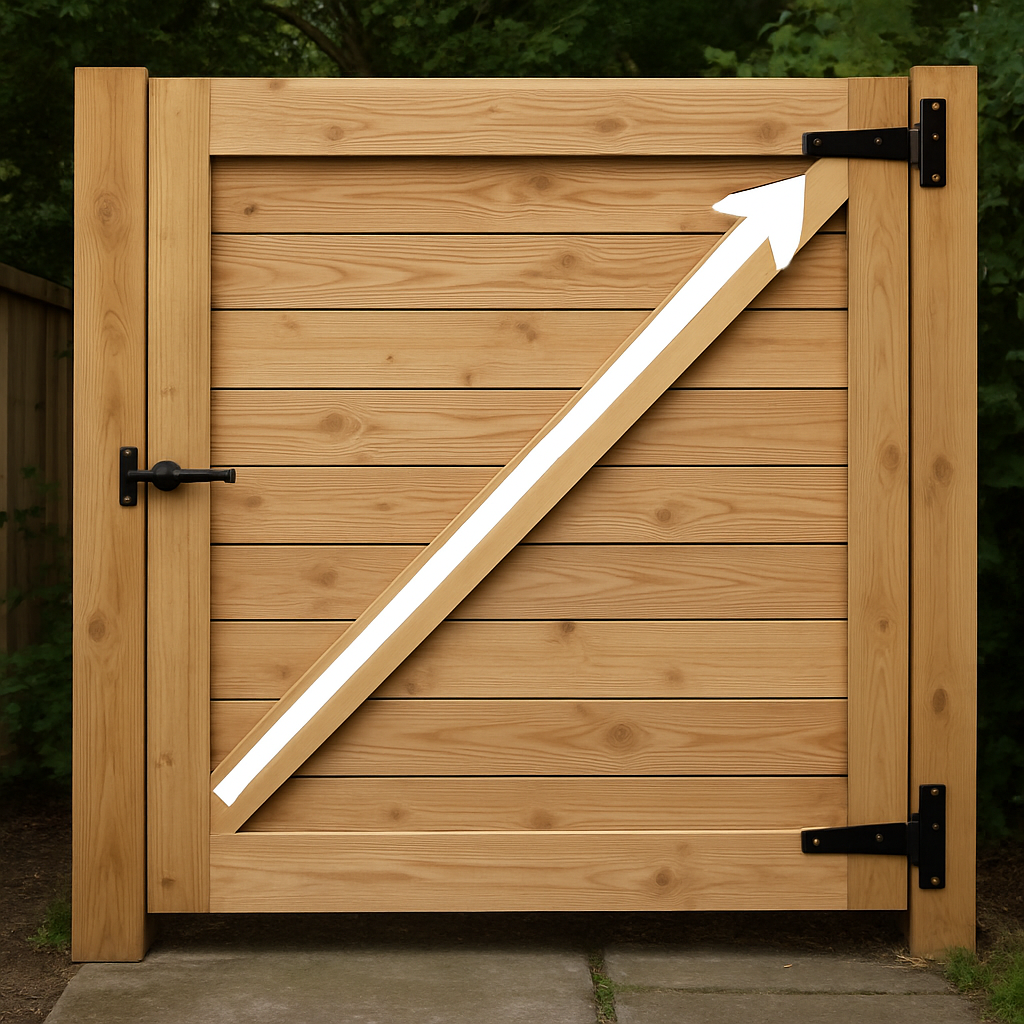
By adding that diagonal board, you instantly transform the weak rectangle into two super-strong triangles. A triangle is the strongest, most rigid shape in construction—it simply can’t be pushed out of shape easily. This brace acts like a prop, taking all the weight from that sagging bottom corner and pushing it diagonally upwards toward the strong top hinge, which is anchored securely to the main fence post.
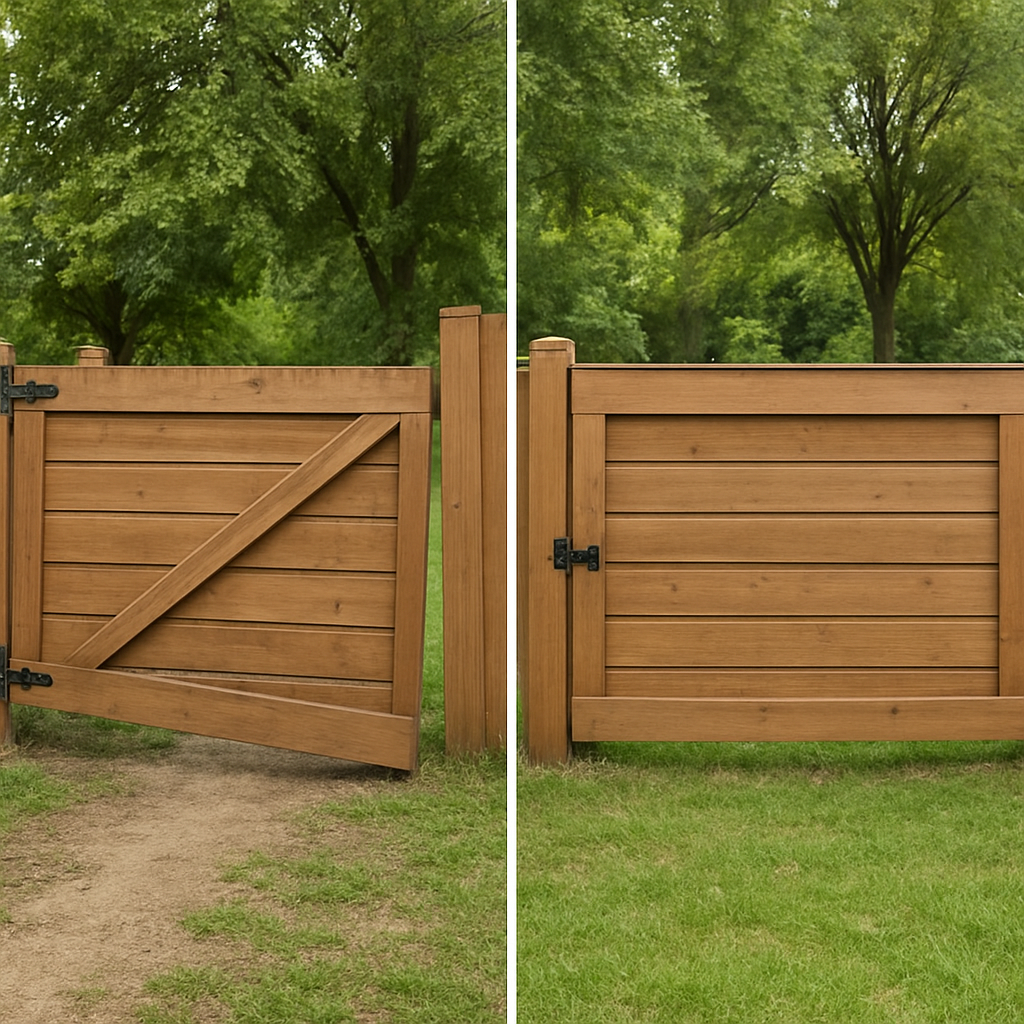
This leads to the golden rule for a sag-free gate: the diagonal brace must always run from the bottom of the latch side up to the top of the hinge side. Think of it as propping up the weakest point. Get this one detail right, and you've conquered the biggest challenge in building a modern gate that not only looks great but also works perfectly.

Building it Tough: The Two Essential Parts of a Strong Gate
With that golden rule in mind, it's helpful to think of a well-built gate having two distinct parts: a skeleton and a skin. This distinction is crucial for both cedar plank gate construction and sleek metal frame wood panel gate designs. The "skeleton" provides all the strength, while the "skin" delivers the style and privacy you want.
This powerful structure is called the gate frame. Usually made of sturdy 2x4s, the frame is the rectangular box that contains the diagonal brace. It is the single most important element for preventing sag. Think of it as the chassis of a car—it’s the rigid foundation that everything else is built upon. Without a solid, square frame, the gate is guaranteed to fail over time.
The horizontal planks you see are the "skin," or what builders call infill boards. Their only job is to look good and provide privacy. They carry no weight and offer no structural support. This is why you can't just attach boards to your fence post and call it a gate; you must first build a self-contained, rigid frame that can support itself and the decorative boards you attach to it.
What's the Best Wood for Your Gate? A 3-Way Comparison
A strong frame can’t defy gravity all on its own; the material you choose for it and the infill boards plays a huge role. When considering the best wood for an outdoor privacy gate, remember that weight is the enemy. Heavier materials put more stress on the frame, hinges, and post, increasing the long-term risk of sag. Here’s a quick comparison of your most common options:
-
Cedar: A popular choice for a reason. It’s naturally resistant to rot and insects and is significantly lighter than other woods. Its main drawback is the higher upfront cost.
-
Pressure-Treated (PT) Pine: This is the budget-friendly option. While it’s treated to resist rot, it is very heavy—and it gets even heavier when it absorbs rainwater. It's also more prone to warping and twisting over time.
-
Metal Frame w/ Wood Panels: This hybrid approach gives you the best of both worlds: a strong, stable, and lightweight steel frame with the aesthetic of wood infill. This is the most durable but also the most expensive option.
Ultimately, your material choice creates a domino effect. A heavier gate made from pressure-treated pine doesn't just need a stronger frame; it demands more robust posts and heavy-duty hardware to handle the load. This is why you should never skimp on the parts that do the lifting.
Don't Skimp on Hardware: Choosing Hinges and a Latch That Last
The weight of your gate’s wood directly determines the hardware it needs. Think of hinges like tires on a truck—they have a weight limit, known as a “load rating.” Always choose heavy-duty hardware rated for significantly more than your gate’s estimated weight. It’s the cheapest insurance against future sagging for wide wood gates.
While a self-closing hinge for a wood gate is tempting for convenience, most are not designed for the heavy, wide gates popular today. They can struggle to close the gate completely or wear out quickly under the strain. For long-term reliability, it's often better to stick with robust, standard strap or T-hinges.
Finally, give yourself a long-term advantage with an adjustable latch. Even a perfectly installed horizontal fence gate post can shift slightly with seasonal ground movement, causing a latch to misalign. An adjustable model lets you easily fine-tune the fit over the years, ensuring your gate always closes securely and without a struggle.
Your Perfect Horizontal Gate: A Final Checklist for DIY or Hiring a Pro
Before, a sagging gate might have seemed like a mystery. Now, you hold the key to preventing it: a solid frame and a correctly placed diagonal brace. To decide between following DIY horizontal slat gate plans or hiring a professional, ask yourself:
-
Do I have the right tools (miter saw, level, drill)?
-
Am I confident in the "Golden Rule" of the diagonal brace?
-
Is my goal to save money (DIY) or save time (Pro)?
Whether you build it yourself or hire a pro, you’ll never see a gate the same way. You now have the knowledge to ensure the job is done right. That smooth, sag-free swing isn't magic—it's a sign of a project built with confidence.

Leave a comment
This site is protected by hCaptcha and the hCaptcha Privacy Policy and Terms of Service apply.